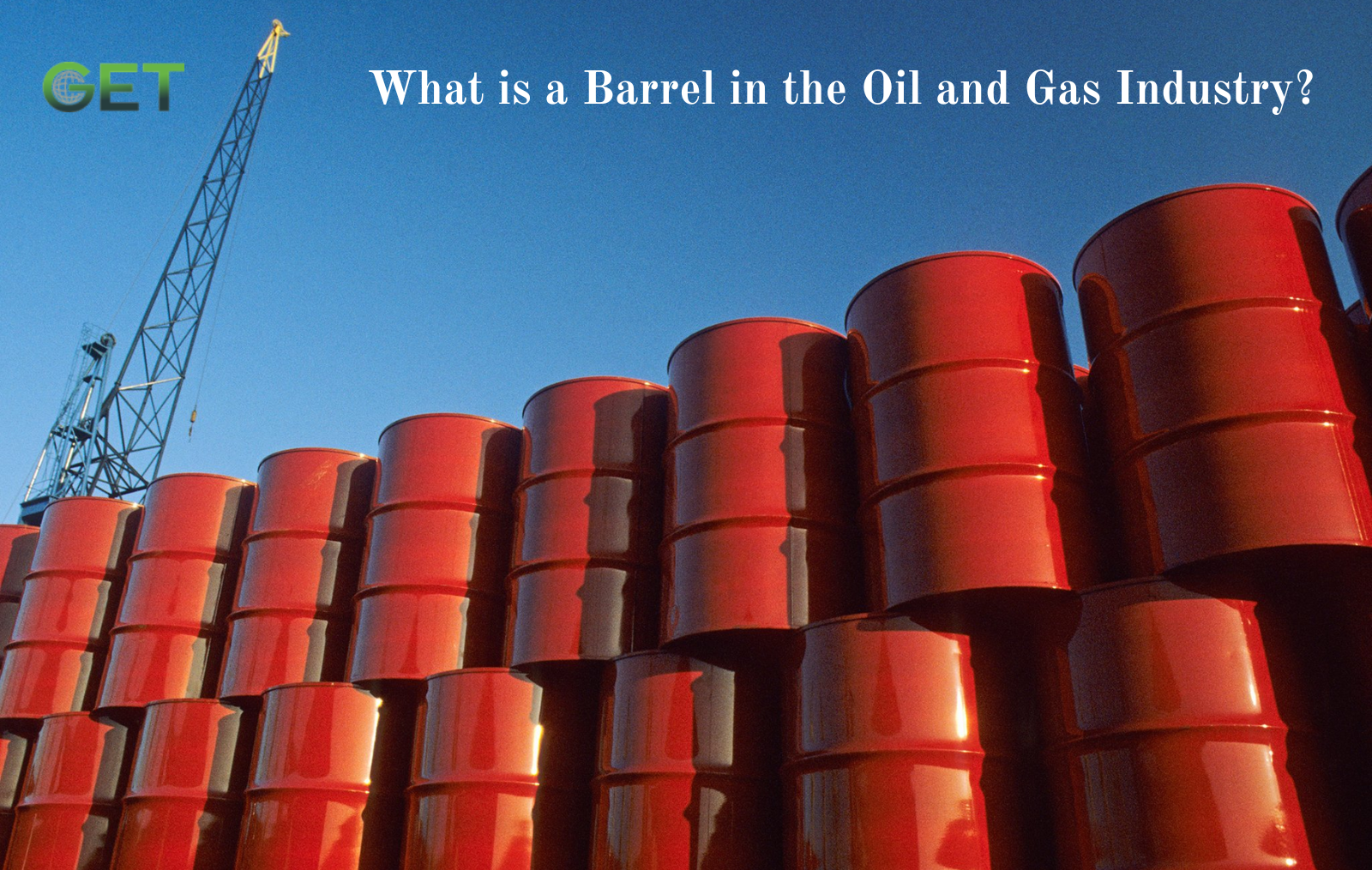
In the global market and especially the oilfield industry, there are a few words that are extremely fundamental and one of them is – barrel. If you’ve ever wondered what a barrel in the oil and gas industry is- you are at the right place. A barrel is the standard unit of measurement used to quantify crude oil production, pricing, reserves, and trade worldwide. The key focus of analysts, investors, and management is to evaluate the sum of all energy types the firm can get from the process of using various energy resources. This is also called crude oil equivalent (COE). Most oil companies produce a blend of oil and gas as well as various other products that are derived from petroleum, but each is measured in its own unit of measurement.
In this article, we will understand the concept of barrels in the upstream oil and gas industry.
Key Takeaways:
Read Also- Christmas Tree vs Wellhead: What Oilfield Teams Should Actually Know
Understanding the Barrel in Upstream Oil and Gas Industry:
So, you may ask, what is barrel in simple terms?
A barrel (symbol: bbl.) is a unit of volume specifically standardized at 42 U.S. gallons, approximately 159 Liters, or 0.159 cubic meters. While modern digital systems track production electronically, the barrel remains the official unit for:
With advances in technology, new measurement systems have been adopted for the industry, but it is important to notice that the traditional ones in the form of barrels are still alive due to the latter’s historical development and global distribution.
One of the standard units for oil is a barrel, whereas the standard unit for natural gas is a billion cubic feet. The mechanism for the industry to manage such comparisons was adjusted to the volume of cubic feet, which were specified as “equivalent barrels” of crude oil. A cubic foot of natural gas is generally accepted to have the same amount of energy as one barrel of oil, which is about 6,000 cubic feet. As a result, the volume of natural gas is “equivalent” to one barrel of oil.
3 Types of Barrels in the Upstream Oil and Gas Industry:
The 42 US gallons that the standard oil barrel is supposed to have is the main characteristic that makes it the same in all places. Therefore, people should come to grips with the multifaceted definitions of the term:
This barrel was originally used for measuring and selling crude oil. Which is a measurement for 42 US gallons or 159 Liters.
It is a number that denotes combining different sorts of energy (natural gas, crude oil, etc.) in a single unit. This is useful to know as it is the energy produced from one source that can be compared to that from a different source.
It measures the volume of products that are gotten from crude oil, like gasoline, diesel, and jet fuel.
Why 42 Gallons?
The 42-gallon standard dates to the early U.S. oil industry. The size was chosen because:
The Barrel as a Unit of Measurement:
Even today, the barrel is the official unit of measure in the oil sector. At 42 U.S. gallons, this is the size of the barrel, which is roughly 159 Liters.
Production Reporting: Oil production which is a flawless way of getting the product can be reported as the barrels per day (bpd), and it becomes the most transparent metric to the operators.
Pricing: It is the oil price in dollars per barrel, which is a yardstick, and it is the price currently ruling the market transactions. Oil prices primarily based on two major benchmarks such as Brent Crude and West Texas Intermediate.
Reserves Estimation Oil reserves are made in barrels, which is the standard unit to assess the quantity of these raw materials.
Conversions: Barrel Oil and Gas Formula
For people working in the oil and gas industry getting a grip on barrel measurement is central. Here is a simple barrel in oil and gas formula:
The Barrel in Global Oil Markets
The unit is so versatile and flexible that it easily becomes a point of reference in the worldwide scene of the oil trade. The light crude oil such as WTI (West Texas Intermediate) and Brent Crude are priced in barrels, with the profit or loss of crude oil prices being the basic determinant of the global oil pricing policy. These benchmarks tell the traders, investors, and the policymakers which choices are the best to make.
Technological Advancements in Barrel Measurement
Technological progress greatly raised the chances of the industry to account for all the barrels accurately. The digital monitoring system is making headway now by providing the most up-to-date figures in terms of the production volume, thus, getting to a point when the most precise figures about the barrels produced and consumed can be given. These milestones are making the operations quicker, and they propose better resource utilization.
Environmental Considerations: The Carbon Footprint per Barrel
This term is also part of the environmental discussion. The parameters of energy content such as “barrels of oil equivalent” (BOE) are employed to gauge the energy content among different fuels, as a source of aiding in the evaluation of environmental impact and energy efficiency. A typical scenario for the formation of the industrial strategy that will be underpinning the mission which is reducing the carbon footprint and the pro-sustainable energy practices can be done by setting the standards in this respect.
Recent Industry Developments (2025 Outlook)
Energy policy shifts in the United States continue to influence domestic production levels and export volumes. Regulatory adjustments and streamlined project approvals may affect upstream oil and gas activity levels in key regions such as Alaska.
The U.S. Energy Information Administration projects oil price fluctuations in the coming years, with expectations of moderate price adjustments depending on global supply-demand balances.
India is expected to remain one of the fastest-growing oil demand centres, expanding refinery capacity and increasing its role in global crude trade dynamics.
The US President, Donald Trump, who was the one who made the announcement, issued a special order to increase the production of U.S. oil and gas to the American nation. This President’s order allowed the energy projects to be streamlined and the restrictions in some locations, such as Alaska, to be rolled back. Energy policies are on the way to being substantiated in the era of a gradually lower domestic energy price rate and higher export volumes.
Conclusion
The barrel is far more than a historical measurement—it is the foundation of the modern energy economy. In the upstream oil and gas industry, the barrel represents:
For companies which are grappling with the complexities of the oil and gas industry, having a skilled service provider in their camp is crucial. GET Global Group delivers full-stack solutions that are further custom-tailored specifically for the industry’s rare requisites at the same time ensuring its efficiency, flexibility, and excellence all along.
By Get global | February 24, 2026
Choosing an oilfield service provider rarely feels like a risky decision at the start. On paper, most providers look capable. Certifications are in place. Equipment lists are impressive. Commercial terms appear competitive. The problems usually show up later. A few weeks into operations. After the first unplanned shutdown. When coordination […]

By Get global | February 19, 2026
In today’s constantly evolving energy landscape, selecting the right Upstream Oilfield Services Provider is not only essential but also a strategic decision that directly influences the performance, safety and well being of the workforce. The upstream oil and gas sector operates in one of the most hazardous and risk – […]

By Get global | February 16, 2026
In today’s rapidly evolving energy landscape, the upstream segment is not only crucial in the oil and gas industry but also the basis of finding and exploring hydrocarbons. As projects move into deeper and much complex territories, upstream companies are involved in all the phases of the oil and gas […]

By Get global | January 30, 2026
Upstream oil and gas is where the real work starts. This is the part of the value chain where exploration wells are drilled, rigs are mobilized, and production systems are installed, often hundreds of kilometers away from stable ports, roads, or population centers. Logistics here supports drilling campaigns, well interventions, […]

By Get global | January 27, 2026
The oil and gas industry operates under unpredictable conditions which make it difficult for projects to succeed. When something goes wrong, it goes wrong fast. The situation develops into dangerous conditions which result in multiple fires, injuries, shutdowns and environmental damage that lasts for many years. The oil and gas […]