Envision India in 2030- a nation that is fuelled by the aspirations of over a billion people, driven by economic growth, rapid urban transformation, and a rising middle-class population. Across the country, infrastructure booms, air travel is at a record high, and the expansion in the automotive landscape is unmatched. Underlying this momentum is the increasing demand for oil and gas especially transport fuels- gasoline and jet fuel being amongst the most crucial ones, as they have become enablers of the Indian mobility landscape and the projected progress.
The upstream oil and gas industry is one of the primary causes of India’s growing demand for transportation fuels. Upstream is exactly where the value chain of oil starts with, which is exploration, drilling, and extraction of crude oil or natural gas from reservoirs. The efficiency and effectiveness of this segment determines the capacity of any country to meet the rising demand of transport fuels.
In recent times, India has seen nearly a surge of 6% per annum in the demand of jet fuel; it is among one of the fastest growth rates globally, which reflects greater air connectivity, a better scale of urbanization, and a significant increase in the purchasing power of the middle class. On the other hand, there is approximately a 4% increase annually up to 2030 in the consumption of gasoline, propelled by a 40% projected expansion in passenger vehicles and consistent demands for two-wheelers and three-wheelers. India’s current and forecasted landscape is unique but plays an integral part in meeting the overall energy demand globally.1
If you look at the history of India’s reliance on imports of crude oil, it currently accounts for almost 87% of requirements which has exposed its economy to price volatility and geopolitical insecurity. Identifying these vulnerabilities – India has boarded on a continuous investment drive to strengthen production especially in the upstream oil and gas industry-
These crucial steps are not only increasing the availability of crude oil for refineries but also secure reliable and cost-effective resources for India’s growing transport sector.
The output of the upstream oil and gas sector is fed straight into India’s vast refining network, where it transforms crude oil into essential fuels like jet fuel and gasoline. Whether it’s a family’s first car, a business traveller’s flight, or the vast logistics network that drives Indian commerce, this value chain highlights a glaring dependency: increases in upstream exploration and production capabilities translate into increased self-reliance, price stability, and robust supply chains for end-user mobility.
Getting back to where we started, by 2030, India is poised to record the highest growth in oil demand in the global markets, surpassing the new-age emerging markets as transport fuel will continue to be its principal growth engine. India’s ability to meet this predicted demand sustainably depends on the strength, innovation and agility of its upstream oil and gas sector.
India’s positioning in the oil and gas industry is no longer merely about consumption growth, it is about the technology driven transformation, strategic decisions, resilient footings in the energy systems. The upstream oil and gas industry stands at the crossroads of converting untapped geological potential into a fuel that in turn drives the ambition and economic advancement of the country with a population of billions of people coming together from varied need matrix.
Read Also- Upstream Oil and Gas: Exploring Key Operations and Insights
By Get global | February 24, 2026
Choosing an oilfield service provider rarely feels like a risky decision at the start. On paper, most providers look capable. Certifications are in place. Equipment lists are impressive. Commercial terms appear competitive. The problems usually show up later. A few weeks into operations. After the first unplanned shutdown. When coordination […]

By Get global | February 19, 2026
In today’s constantly evolving energy landscape, selecting the right Upstream Oilfield Services Provider is not only essential but also a strategic decision that directly influences the performance, safety and well being of the workforce. The upstream oil and gas sector operates in one of the most hazardous and risk – […]
By Get global | February 16, 2026
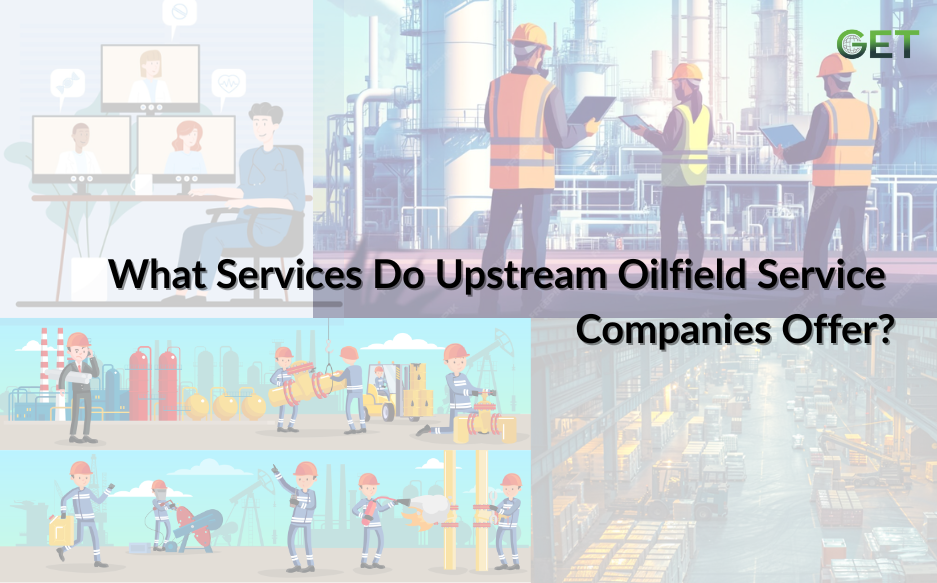
In today’s rapidly evolving energy landscape, the upstream segment is not only crucial in the oil and gas industry but also the basis of finding and exploring hydrocarbons. As projects move into deeper and much complex territories, upstream companies are involved in all the phases of the oil and gas […]

By Get global | January 30, 2026
Upstream oil and gas is where the real work starts. This is the part of the value chain where exploration wells are drilled, rigs are mobilized, and production systems are installed, often hundreds of kilometers away from stable ports, roads, or population centers. Logistics here supports drilling campaigns, well interventions, […]

By Get global | January 27, 2026
The oil and gas industry operates under unpredictable conditions which make it difficult for projects to succeed. When something goes wrong, it goes wrong fast. The situation develops into dangerous conditions which result in multiple fires, injuries, shutdowns and environmental damage that lasts for many years. The oil and gas […]