One of the most technologically developed domains has been the oil and gas sector. The directional drilling is in the list of one of the highly transformational techniques. Directional wells are the ones that are mainly responsible for the effective resource extraction and at the same time for the least environmental damage. This blog will discuss what a directional well is, its importance, the working process, the types, the applications, and so on, which will provide a broader view of this crucial element of the oil and gas industry.
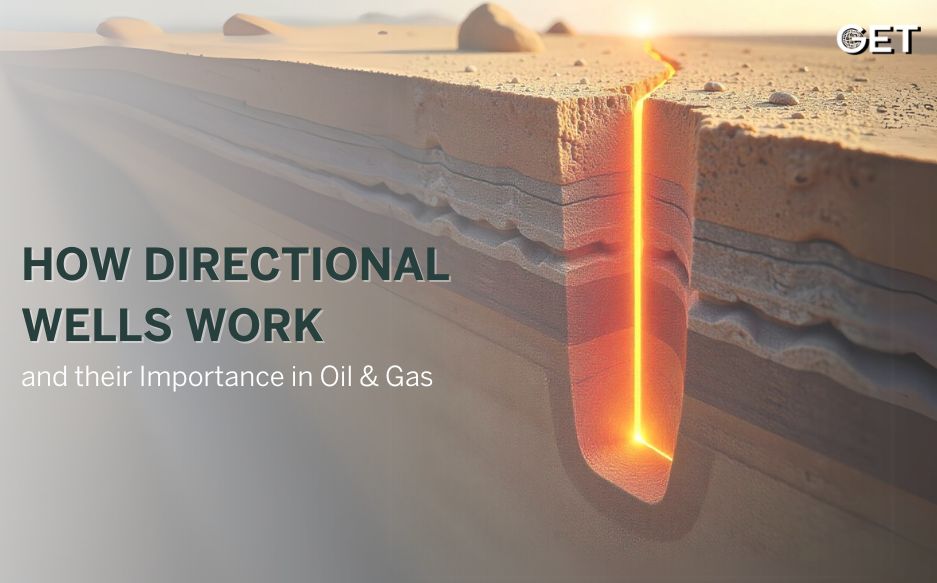
A directional well is the oil industry name for an oil well with a borehole that deviates from a vertically straight line. Mostly it is done with the intention of reaching several target sands. It is a type of well drilled at an angle to reach a specific subsurface target. The angle of the vertical wells changes a lot in the later part of the well. Therefore, without being steered to follow a predetermined path, directional wells cannot be constructed.
This method not only allows the drilling equipment to be taken to the right place at the right time but also enables the operator to access the drilling location on the surface. This in turn improves the success, scope, and safety of resource extraction. Oil and gas discovery or exploitation is not the only use of directional wells. Another possible use is geothermal energy production involving mining and even environmental usages.
One of the crucial reasons why directional drilling has become very ubiquitous is the following:
The directional drilling process consists of sophisticated tools and equipment. Below is a simplified guide:
This results in precise adjustments. With the unmatched precision of the latest technology and the engineering expertise, the goal of directional drilling is achieved which is the accuracy of the method and the tremendous efficiency of it.
Directional wells can be categorized into different types based on their purposes and paths. The primary categories are given below:
Horizontal wells are the type where the drilling is first done in the vertical direction, until they reach the reservoir, and then they are turned to the horizontal direction. These wells are the most suitable technique for thin or layered reservoirs where it does the most impact by increasing the reservoir production.
ERW’s main design is to be positioned at an outlying location and drill across short distances to reach distant reservoirs. These are used mostly in the offshore area that power platform installation costs.
These wells include multiple branches that emerge from a single main wellbore. The introduction of multilateral wells improves the drainage of reservoirs and decreases drilling expenses.
These are the wells in which there is an S-shaped approach, with initially the vertical section which then inclines and concludes at a straight angle. Such wells are optimal for targeting beneath obstacles.
An off-track is practiced in the form of a secondary well that is driven from an existing wellbore to approach new reserves or simply go around the obstructions. Each directional well is made to suit individually either the geological or operational aspects. Opting for a directional well can produce various efficiency and versatility.
Although horizontal wells are included in the category of directional wells, there are some differences between them:
| Aspect | Directional Well | Horizontal Well |
| Definition | Any well drilled at an angle to the vertical. | A well drilled horizontally through the reservoir. |
| Purpose | Access hard-to-reach reservoirs and optimize recovery. | Maximize contact within thin reservoirs. |
| Complexity | Requires advanced steering and planning. | Focused on transitioning to and maintaining a horizontal trajectory. |
| Applications | Widely used in offshore and onshore operations. | Common in shale and unconventional reservoirs. |
Directional wells are used in different situations and fields, as follows:
Coiled tubing is a continuous steel pipe used for various well interventions, including directional drilling. The process of drilling in a specific direction through a wellbore with coiled tubing is as follows:
Directional wells have redefined oil and gas operations by granting the industry the opportunity to maximize the most productive use of resources in a less expensive and ecological manner. Their advantages range from enabling subsurface access to improving production rates. Nevertheless, they also face difficulties such as high costs and operational complexity. The oil and gas sector continues to modify the directional drilling techniques because of the utilization of cutting-edge equipment and innovation. The Get Global Group is the main player in the technological field of directional drilling as well as the other oil and gas technologies. They are the reliable partners in this industry which supply the most modern solutions and the expertise to make the drilling process better and thus, be a successful company. You can find out more about the company and how it brings comprehensive services and contributions to the oil and gas sector on Get Global Group.
Read Also- Transformation of Upstream Oil & Gas through Advanced Technology
By Get global | February 24, 2026
Choosing an oilfield service provider rarely feels like a risky decision at the start. On paper, most providers look capable. Certifications are in place. Equipment lists are impressive. Commercial terms appear competitive. The problems usually show up later. A few weeks into operations. After the first unplanned shutdown. When coordination […]
By Get global | February 19, 2026
In today’s constantly evolving energy landscape, selecting the right Upstream Oilfield Services Provider is not only essential but also a strategic decision that directly influences the performance, safety and well being of the workforce. The upstream oil and gas sector operates in one of the most hazardous and risk – […]
By Get global | February 16, 2026
In today’s rapidly evolving energy landscape, the upstream segment is not only crucial in the oil and gas industry but also the basis of finding and exploring hydrocarbons. As projects move into deeper and much complex territories, upstream companies are involved in all the phases of the oil and gas […]
By Get global | January 30, 2026
Upstream oil and gas is where the real work starts. This is the part of the value chain where exploration wells are drilled, rigs are mobilized, and production systems are installed, often hundreds of kilometers away from stable ports, roads, or population centers. Logistics here supports drilling campaigns, well interventions, […]

By Get global | January 27, 2026
The oil and gas industry operates under unpredictable conditions which make it difficult for projects to succeed. When something goes wrong, it goes wrong fast. The situation develops into dangerous conditions which result in multiple fires, injuries, shutdowns and environmental damage that lasts for many years. The oil and gas […]